Boyana Church, Sofia's UNESCO Treasure of 1259 Frescoes
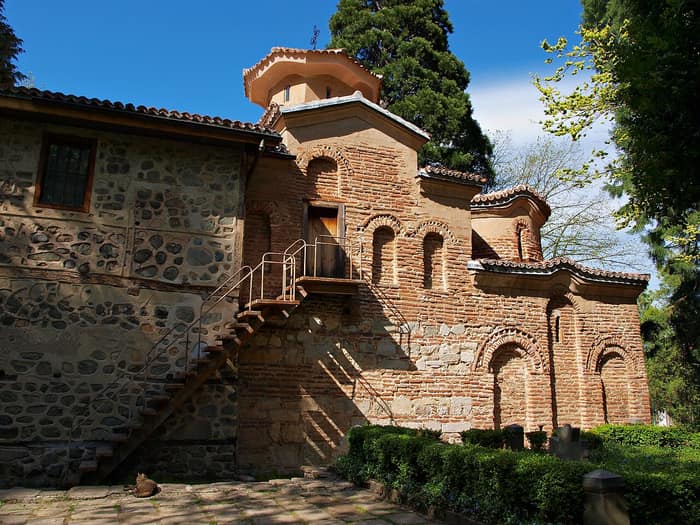
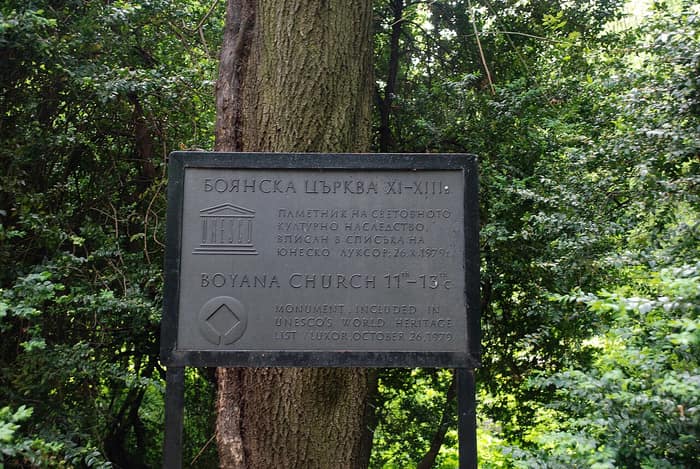
Boyana Church is a small medieval Orthodox church at the foot of Vitosha, in the Boyana quarter on the edge of Sofia. Added to the UNESCO World Heritage List in 1979, it owes its fame to frescoes from 1259 that count among the best preserved medieval paintings in the Balkans. It is easy to reach from the city centre and ideal for art and history lovers.
Nearly eight centuries ago an unknown painter gave faces to 240 figures here with striking realism. A secret signature, “I, Vasiliy inscribed”, was found under plaster only in the 2000s.
The history of Boyana Church
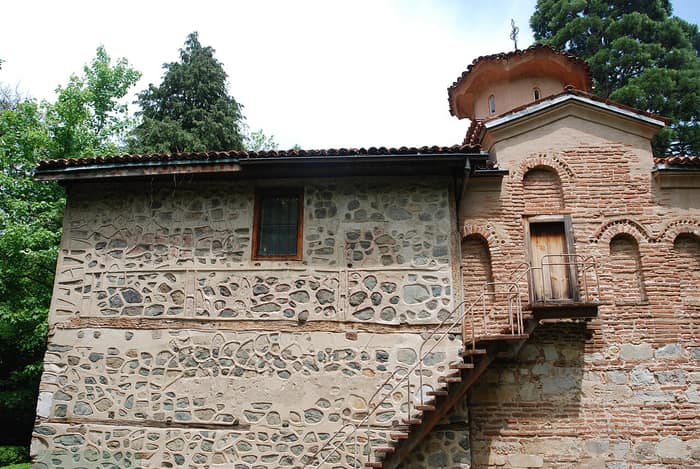
The church stands in Boyana, today a quarter of Sofia at the foot of Vitosha. In the Middle Ages a fortress named Boyana stood here, serving as the residence of the governors of the province of Sredets, as Sofia was then called. The oldest part, the eastern church, was built in the late 10th or early 11th century. It is a small one-apse church with a cross-vaulted interior, and fragments of its first layer of frescoes, from the 11th and 12th centuries, still survive.
In the mid-13th century the building was greatly enlarged. Sebastocrator Kaloyan, a cousin of the Bulgarian tsar, and his wife Desislava added a second section of the two-storey tomb-church type: a family burial chamber on the ground floor and a family chapel above. The church is dedicated to St Nicholas and St Panteleimon, and a patron's inscription in Middle Bulgarian records that it was decorated in 1259, in the reign of Tsar Constantine Asen. The outside of the new part is adorned with ceramic ornaments.
The frescoes of 1259 are the reason for the church's fame. Painted over the earlier layer by an unnamed team linked to the Turnovo school of painting, they show 89 scenes with 240 human figures. The life of St Nicholas fills 18 scenes in the narthex, with details of daily life; in the Miracle at Sea the ship and the sailors' hats recall the Venetian fleet. On the north wall are the portraits of the patrons, Kaloyan and Desislava, and of Tsar Constantine Tikh and Tsaritsa Irina, among the most lifelike in the church and among the oldest portraits of figures from Bulgarian history. The narthex also holds the oldest surviving image of St John of Rila.
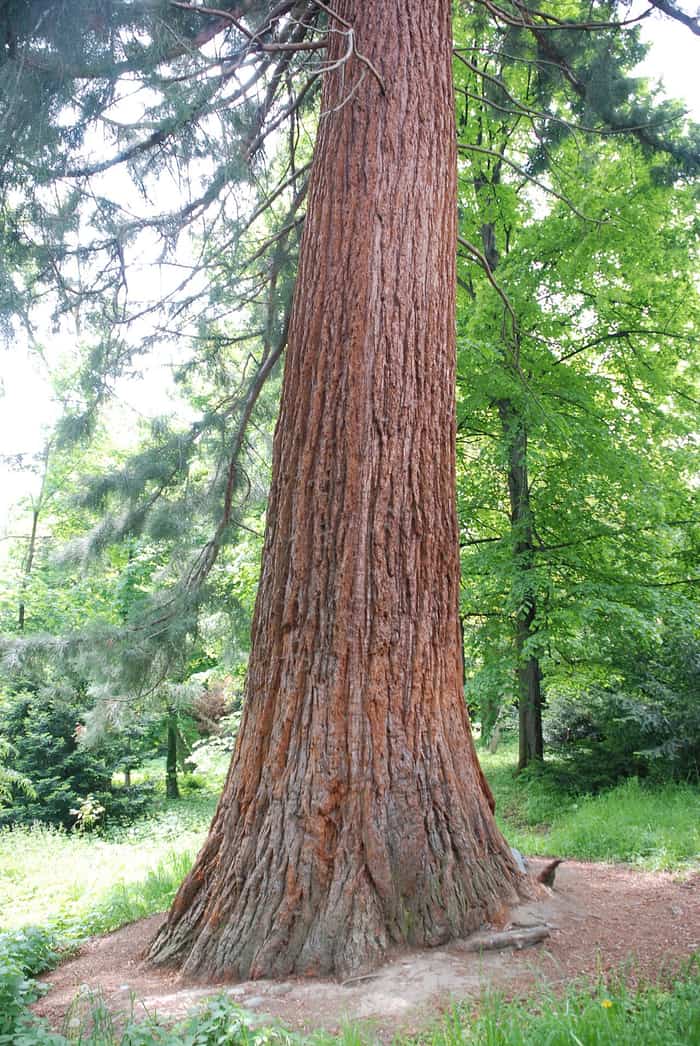
Later painters added further layers in the 14th, the 16th–17th centuries and in 1882, and in the 19th century the church was extended to the west. When villagers wanted to pull the old building down and build a larger one, Queen Eleonora, wife of Tsar Ferdinand I, helped to save it by providing money and land for a new church, and she supported restoration from 1912. Ferdinand laid out a small park around the church, with rare North American sequoias. Eleonora died in September 1917 and was buried beside the church; her grave, devastated in the communist period, was restored after 1990.
Scholars began to study the church in the 19th century, when Victor Grigorovich found the Boyana Memorial of Bulgarian tsars and the Boyana palimpsest here. The French archaeologist André Grabar published a monograph in 1924. The frescoes were restored and cleaned in 1912–1915 and again in 1934 and 1944. The church was added to the UNESCO World Heritage List in 1979 and, after a long period of conservation, was fully reopened to visitors in October 2008, now run as a branch of the National Historical Museum.
Curious facts about Boyana Church
- The walls carry 89 scenes with a total of 240 human figures, many of them with strongly individual faces.
- The patrons Kaloyan and Desislava and Tsar Constantine Tikh with Tsaritsa Irina are shown in portraits considered among the oldest of Bulgarian historical figures.
- In the Miracle at Sea fresco the ship and the sailors' hats recall the Venetian fleet.
- The narthex holds the oldest surviving depiction of St John of Rila.
- During restoration in 2006–2008 an inscription, “I, Vasiliy inscribed”, was found under plaster; some historians doubt it names the “Boyana Master”, since an assistant could have left it.
- A microclimate system keeps the interior at 17–18 degrees Celsius to protect the paintings, and the church is among the 100 National Tourist Sites of Bulgaria.
Tours near Boyana Church
Experiences in the area that you can book online with Viator:


Visiting Boyana Church: what to expect
- To protect the frescoes, entry has been limited to small groups for short visits (reported as up to 8 people for 10 minutes), so expect a short, controlled visit.
- Look for the portraits of Kaloyan and Desislava on the north wall, the 18 scenes of St Nicholas and Christ Pantocrator in the dome of the oldest part.
- In the churchyard you will find the grave of Queen Eleonora and the small park with sequoias planted by Tsar Ferdinand.
- The National Historical Museum is close by, and the Dragalevtsi Monastery lies about 4 km away.
- Check the current opening hours and visiting rules before you go.
Opening hours, access and conditions can change. Check before you go.
Map: where Boyana Church is
Photos of Boyana Church
Questions
What is Boyana Church?
It is a medieval Orthodox church in the Boyana quarter of Sofia, dedicated to St Nicholas and St Panteleimon. It is a UNESCO World Heritage site since 1979.
Why is Boyana Church famous?
It is famous for its frescoes of 1259, with 89 scenes and 240 figures. They are among the best preserved medieval paintings in the Balkans.
How old is Boyana Church?
Its oldest part dates from the late 10th or early 11th century. A second section was added in the mid-13th century and a third in the 19th century.
Where is Boyana Church and how far is it from Sofia centre?
It stands in the Boyana quarter at the foot of Vitosha, about 9 km south of the centre of Sofia.
Who commissioned the frescoes of Boyana Church?
Sebastocrator Kaloyan and his wife Desislava, who enlarged the church in the mid-13th century. Their portraits are on the north wall.
How long can you stay inside Boyana Church?
To protect the paintings, visits have been limited to small groups for about 10 minutes. Check the current rules before you go.
Also nearby
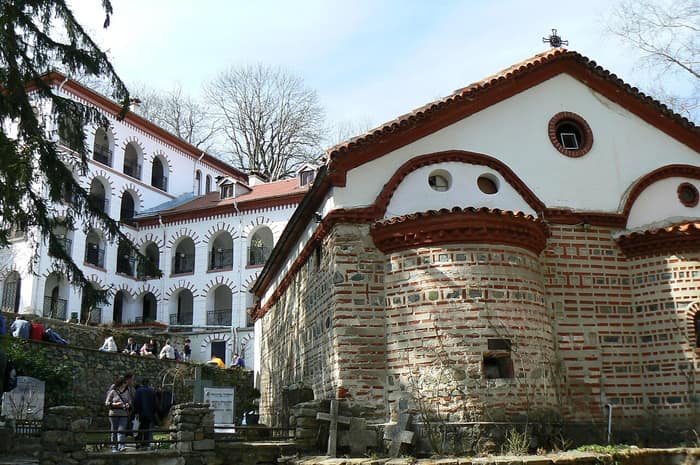
Dragalevtsi Monastery
Sofia · tsar's monastery with 15th-century frescoes
4 km away
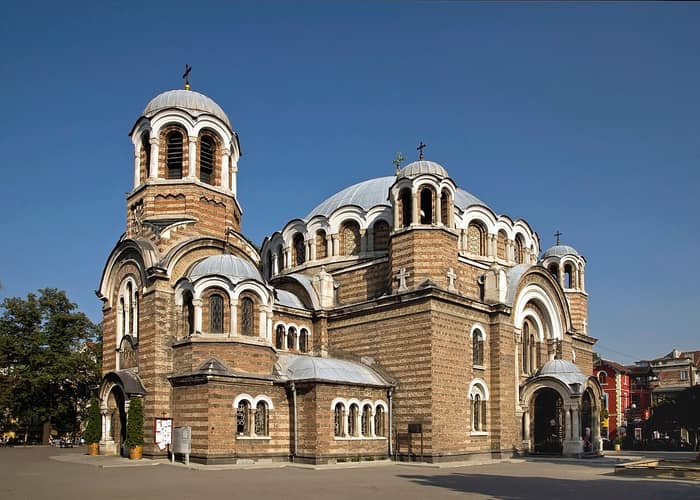
Seven Saints Church
Sofia · a mosque turned church, built over a Roman shrine
7 km away
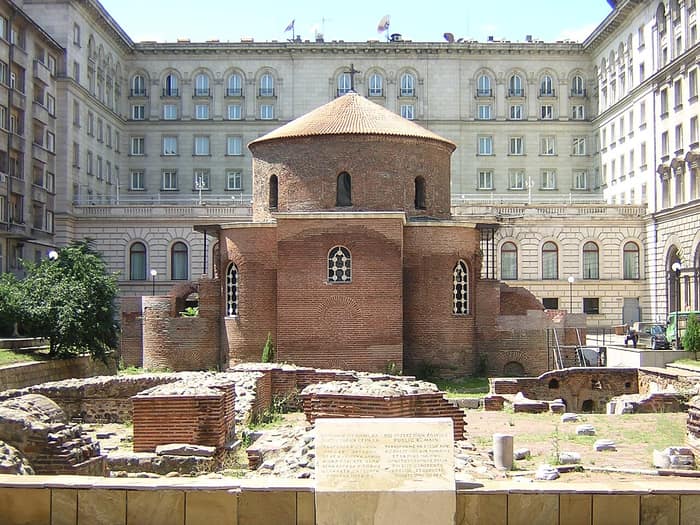
Saint George Rotunda Church
Sofia · Roman rotunda with layers of medieval frescoes
7.5 km away
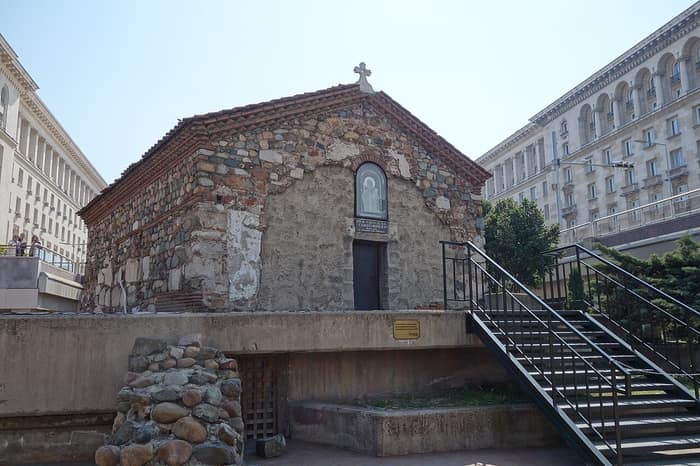
Saint Petka of the Saddlemakers Church
Sofia · medieval church over a Roman crypt in the metro
7.5 km away