Troyan Monastery, the Painted Revival Monastery of the Balkan Mountains
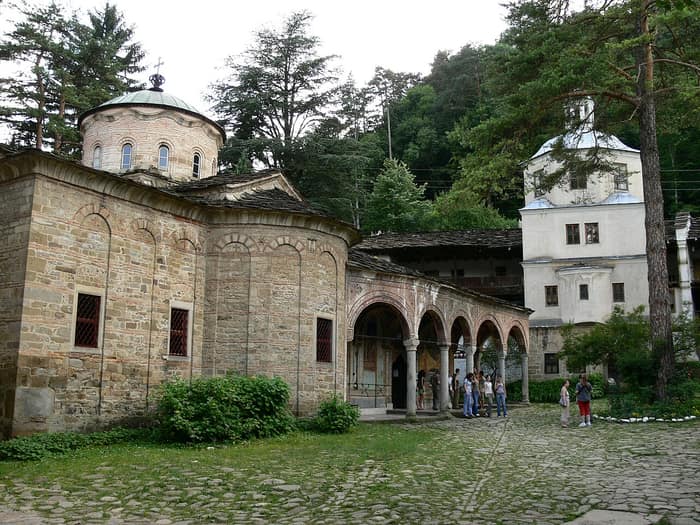
Troyan Monastery, officially the Monastery of the Dormition of the Most Holy Mother of God, stands on the banks of the Cherni Osam near the village of Oreshak, about 10 km from the town of Troyan in the Balkan Mountains. It is the third largest monastery in Bulgaria, with a church covered in frescoes by Zahari Zograf and an icon revered across the country. Few places pack so much art and national history into a single courtyard.
In the late 1840s the painter Zahari Zograf put his own portrait on the church wall at Troyan, a bold move for the time. Decades later the revolutionary Vasil Levski hid in a room of this same monastery.
The history of Troyan Monastery
The monastery was founded no later than the end of the sixteenth century. Bulgarian sources speak of about 1600, under the abbot Kalistrat, and possibly earlier. Tradition tells of monks from Mount Athos who carried the monastery's relic, the miraculous icon of the Three-Handed Virgin, towards Wallachia; the icon is a copy of the old wonder-working icon of the Hilandar monastery, dating from the fourteenth century. A chronicle compiled in 1835 describes an unnamed Bulgarian monk who settled in the mountain wilderness with a single pupil and built a simple hut. Other monks followed, and a wooden church, a residential wing and a small guesthouse soon appeared. Before long, however, a Turkish band destroyed the monastery and killed the abbot.
In the first half of the eighteenth century the monastery grew again and became prosperous. A cell school opened and became increasingly well known after 1765, when it was taken over by the teacher Nikola Varbanov. The abbot Christophor, from Sopot, put up new buildings and in 1771 built a water supply. Around 1780 another abbot from Sopot, Pahomiy, organised a stone main church. From 1785 the abbot Paisiy led the community for thirty-two years: the living quarters around the courtyard rose to two and even three storeys, which was unusual at that time, and a residential and defensive tower stood in the north-western corner. He also founded the skete of St Nicholas the Wonderworker, east of the monastery.
In 1820 the abbot Parteniy built a new enclosure wall, but the pasha of Vidin accused him of raising a fortress to help the Greek rebel Ypsilantis, and he spent several months in prison in Lovech. On 4 December 1830 the monastery became stavropegic, answering directly to the Patriarchate in Constantinople. In 1832 a second skete, St John the Baptist, was founded at a place called Zelenikovets, and donations were collected for a new main church. The sultan's permission arrived in March 1835. The church was built by the Revival master-builder Konstantin of Peshtera on the site of an older church, and it was consecrated on 6 August 1835 by Metropolitan Hilarion of Tarnovo. Because it stands on the former monastery cemetery, a vaulted ossuary was built beneath the altar.
The painter Zahari Zograf decorated the church in the late 1840s, leaving donor portraits and a self-portrait inside and the Wheel of Life on the outer north wall; the carved wooden iconostasis dates from 1839. In the early twentieth century the paintings were redone by the artist Petko Ganin of Kazanlak. The five-storey bell tower was built in 1866 by the master Ivan Kamburov of Mlechevo; parts of it that collapsed in 1898 were restored in 1987.
The monastery was also a centre of learning and of the national cause. A monastery school was founded in 1869, and in the 1870s the monks sheltered revolutionaries. Vasil Levski set up a private revolutionary committee here. The monastery did not take a direct part in the April Uprising, because Turkish troops were quartered inside it. During the Russo-Turkish war of 1877–1878 the monks and local people helped the detachment of General Pavel Kartsov to cross the Balkan range.
Curious facts about Troyan Monastery
- Zahari Zograf painted his own image around one of the windows at the back of the church, a move that was highly controversial at the time.
- The same painter also decorated the central church of Rila Monastery, the largest monastery in Bulgaria, so the two churches are linked by one artist.
- A fresco is said to show all 27 monks who lived in the monastery while Zograf worked, and another painting uses a lion and an elephant as symbols of the strength of the Bulgarian nation.
- Pilgrims come on St George's Day because of an icon of St George in the main church, and the Three-Handed Virgin has been kept here since the seventeenth century.
- The name of the town and of the monastery comes from the old Roman road, the Via Trajana, which linked Moesia with Thrace and the Aegean.
- The monastery is one of the 100 national tourist sites of Bulgaria, a list drawn up by the Bulgarian Tourist Union.
Tours near Troyan Monastery
Experiences in the area that you can book online with Viator:


Visiting Troyan Monastery: what to see
- The main church of 1835 holds the best-known sights: Zograf's frescoes, the 1839 carved iconostasis and the Three-Handed Virgin icon.
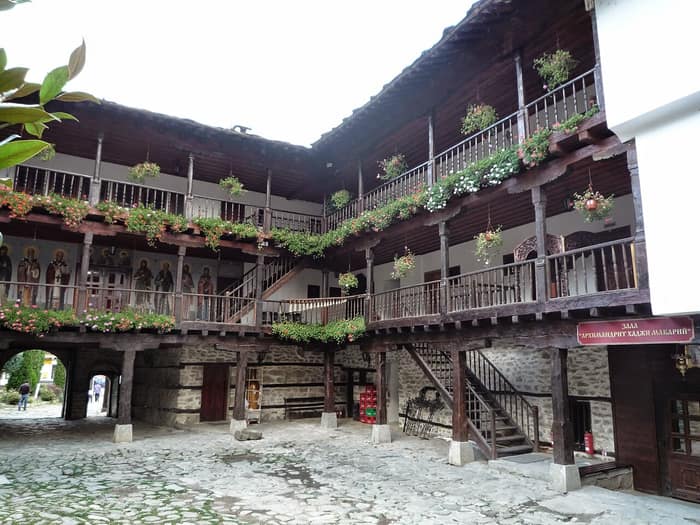
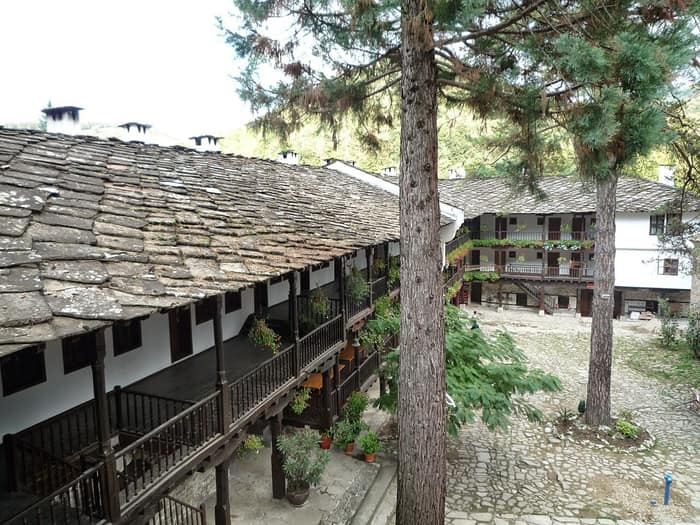
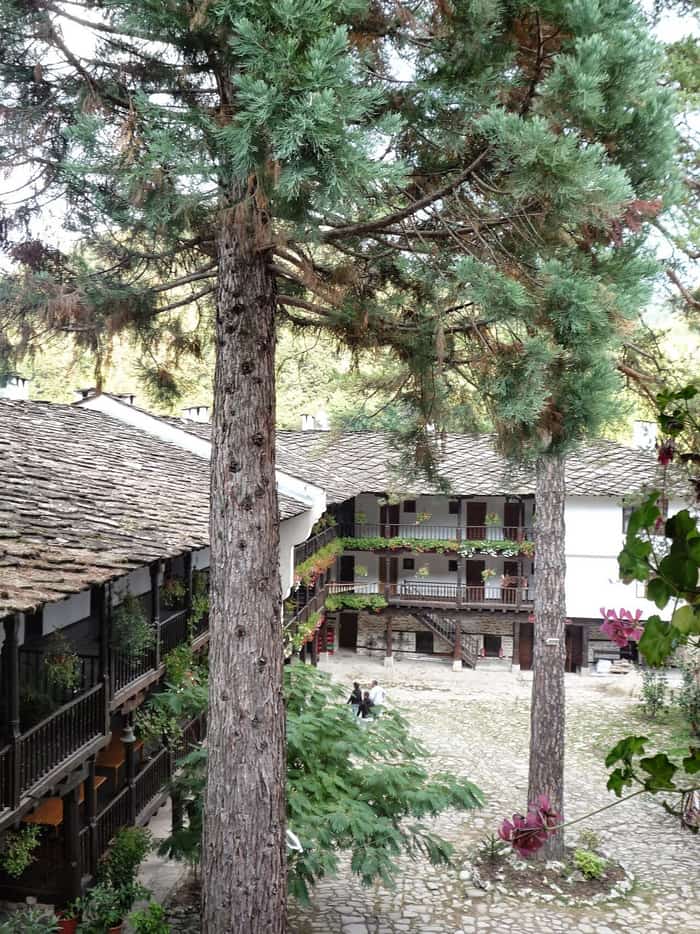
- Walk round the courtyard to see the wall paintings in the arcades and the timber residential buildings in Revival style, up to three or four storeys high.
- The room where Vasil Levski stayed and met other revolutionaries is now a museum, and the wood carvings in the St Nicholas chapel date from 1794.
- The monastery is in the village of Oreshak, about 10 km from Troyan, with public buses from the town and a marked footpath; check the current opening hours and visiting conditions before you go.
- Two daughter sketes belong to the monastery: St Nicholas, about 1 km to the south-east, and St John the Baptist at Zelenikovets, about 8 km to the south-east.
Opening hours, access and conditions can change. Check before you go.
Map: where Troyan Monastery is
Photos of Troyan Monastery
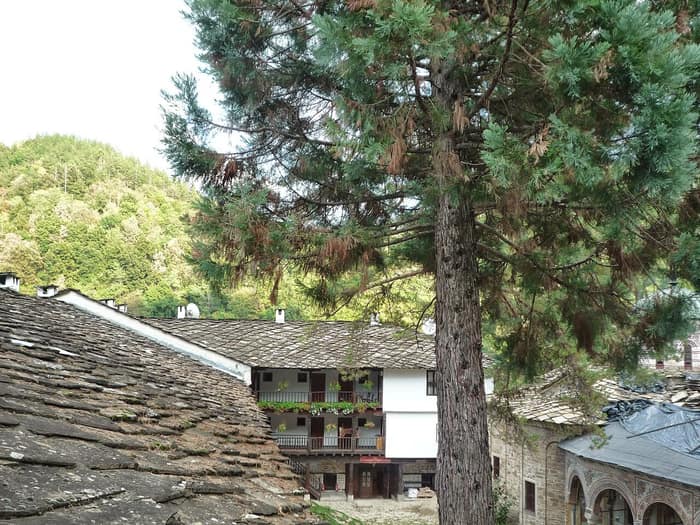
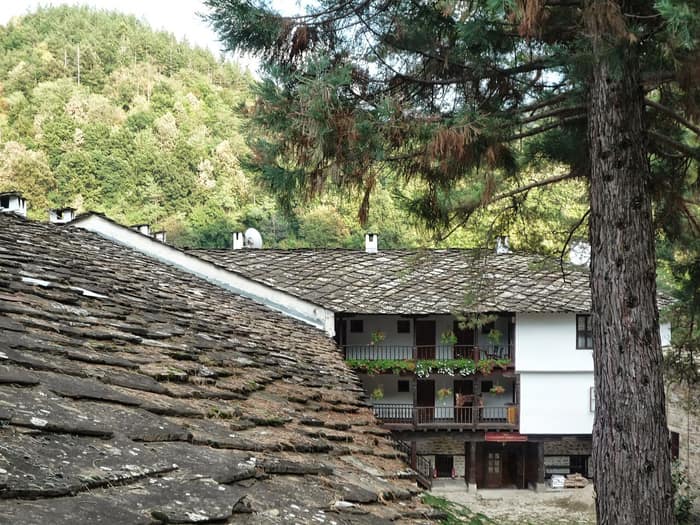
Questions
What is Troyan Monastery?
Troyan Monastery is an Orthodox monastery of the Dormition of the Most Holy Mother of God in the Balkan Mountains. It is the third largest monastery in Bulgaria.
Where is Troyan Monastery and how far is it from Troyan?
It stands on the banks of the Cherni Osam near the village of Oreshak, about 10 km from the town of Troyan in Lovech Province.
Who painted the frescoes at Troyan Monastery?
The frescoes of the main church were painted by Zahari Zograf in the late 1840s. He also decorated the central church of Rila Monastery.
What is the Three-Handed Virgin?
It is one of the holiest icons of Bulgarian Orthodoxy and has been kept at Troyan since the seventeenth century. Tradition says it is a copy of an old wonder-working icon from the Hilandar monastery.
What is the connection with Vasil Levski?
Levski hid and met other revolutionaries in a room of the monastery, now a museum, and set up a private revolutionary committee here.
Can you walk to Troyan Monastery from the town?
Yes, a marked hiking trail leads from Troyan to the monastery and takes roughly four hours. A road of about 10 km also links the two.
Also nearby
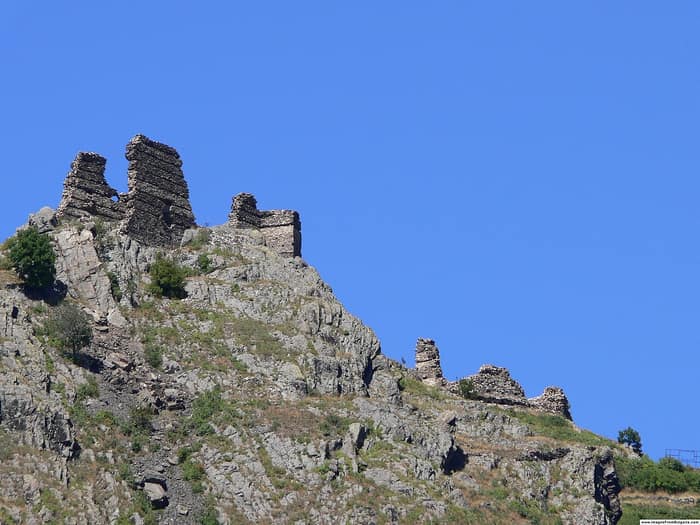
Anevo Fortress
Sopot · medieval fortress with 12-metre walls
21 km away

Shipka Memorial
Shipka · tower with a giant lion, reached by 890 steps
46 km away
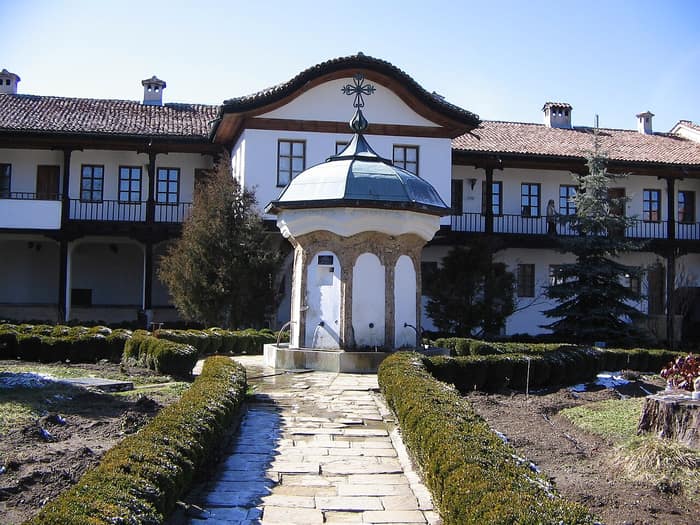
Sokolski Monastery
Gabrovo · Revival convent, eight-tap fountain, rebel history
46 km away
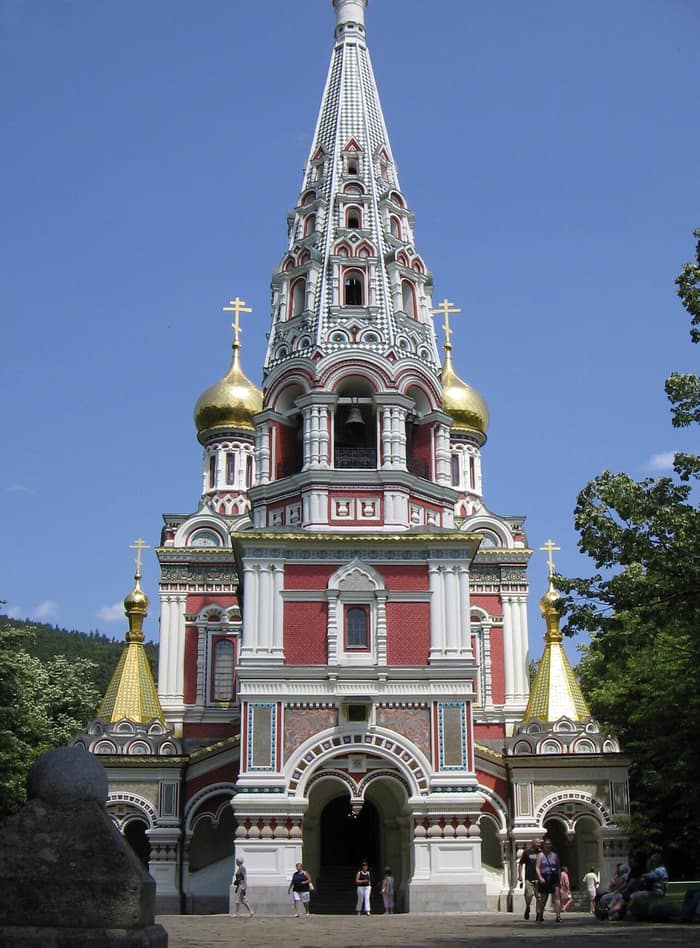
The Memorial Temple of the Birth of Christ (Shipka)
Shipka · Russian-style memorial church with gilded domes
48 km away