Tomb of Seuthes III, the Thracian King's Grave at Golyama Kosmatka
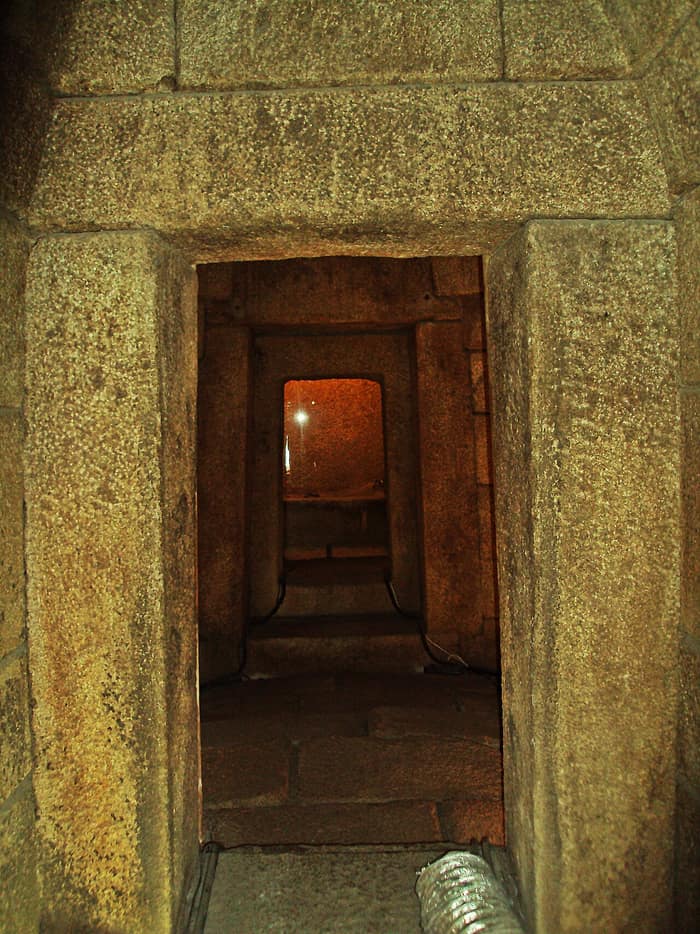
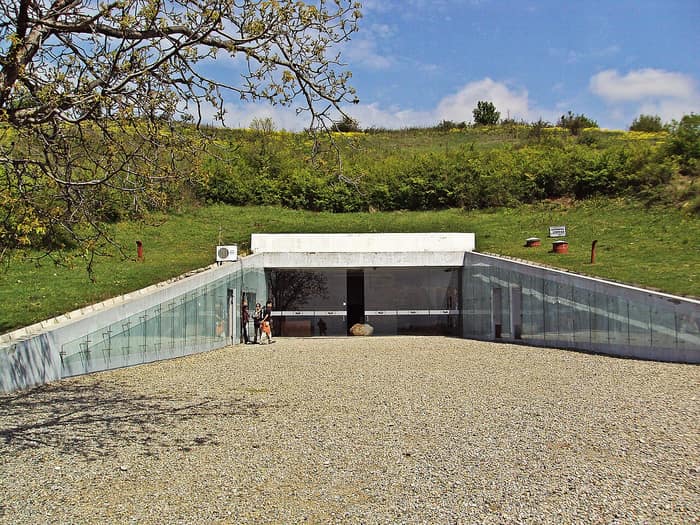
The Tomb of Seuthes III lies in the Golyama Kosmatka mound, about 1 km south of Shipka in central Bulgaria, in the Valley of the Thracian Rulers. A 13 m corridor leads to three chambers, the last carved from a granite block weighing about 60 tonnes. It is one of the most elaborate tombs of the valley and one of the few unrobbed Thracian tombs.
Almost every Thracian king's tomb was plundered long ago, yet this one yielded a golden oak wreath and a bronze head with copper eyelashes. Inscriptions on the finds point to a king named Seuthes.
The history of the Tomb of Seuthes III
Seuthes III ruled the Odrysian kingdom of Thrace from about 331 to about 300 BCE and founded the nearby city of Seuthopolis. His tomb lies in the Golyama Kosmatka mound, which is among the largest in Thrace: up to 23 metres high and 130 metres across. The tomb was built inside an embankment that had been heaped up beforehand, and a wide alley led to its façade and entrance. Some accounts say that the structure began as a temple in the second half of the 5th century BCE, but the excavator's suggestion that Orphic mysteries were held here is not backed by archaeological evidence.
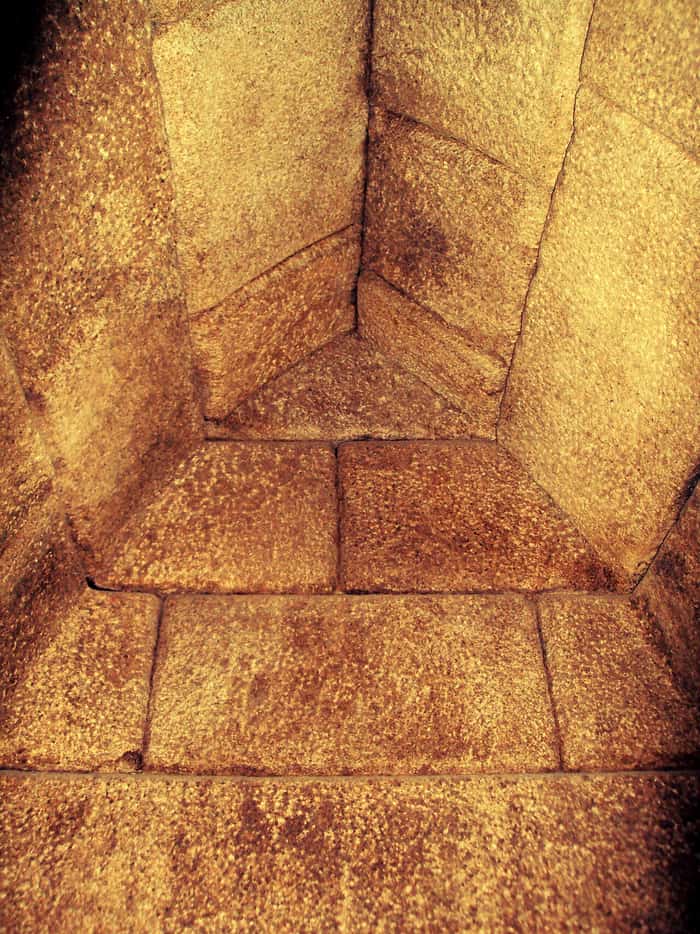
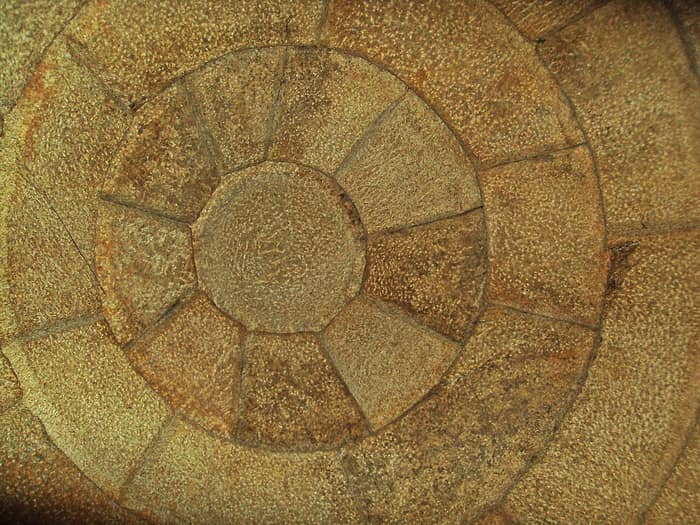
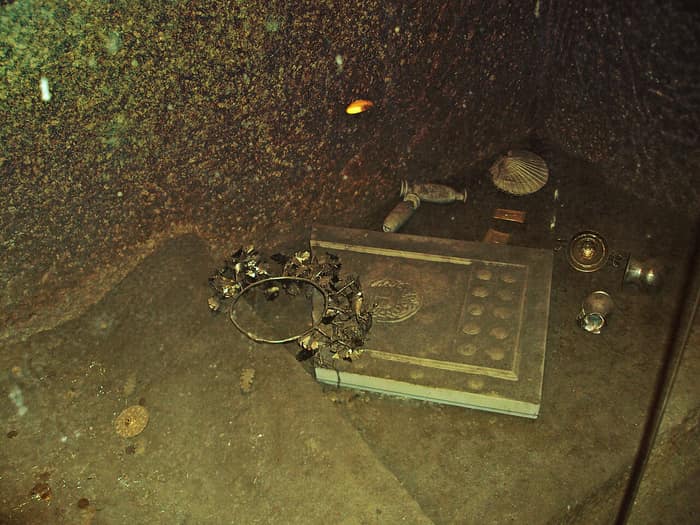
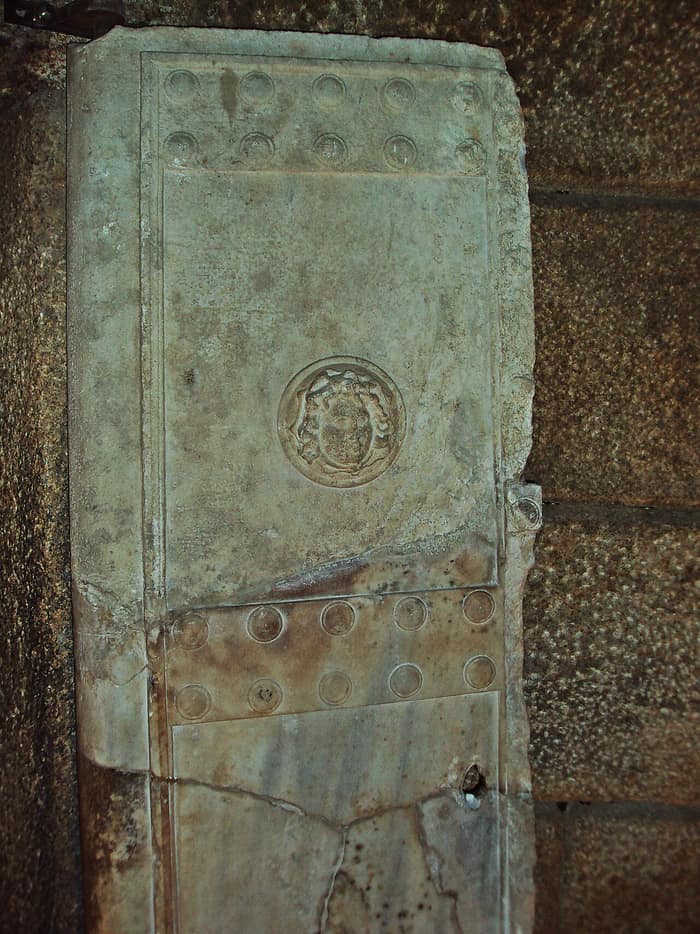
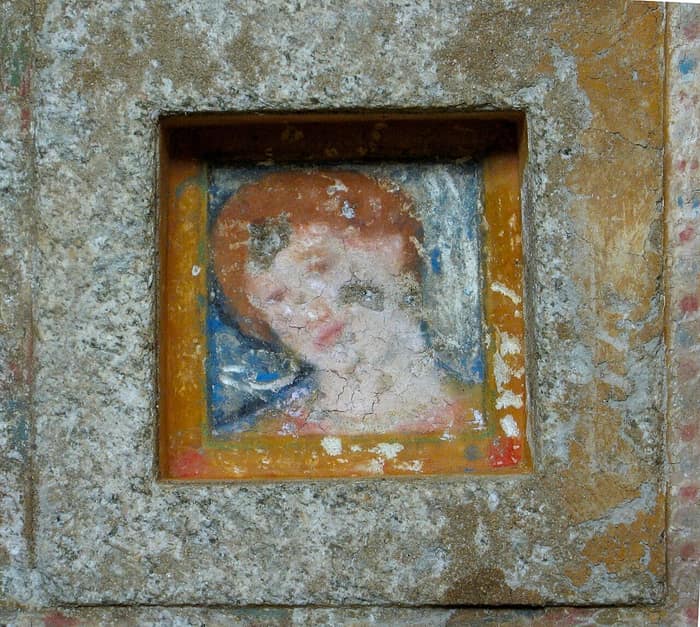
The finds date from the late 4th to the early 3rd century BCE; one of the three amphorae carries a stamp dated roughly to 310–275 BCE. The tomb consists of a corridor 13 metres long and three consecutive chambers. The first is rectangular with a false vault, and a horse was sacrificed in it. The second is round and domed, 4.5 metres high, and was entered through a marble door decorated with relief medallions of Helios and of the Gorgon Medusa. The third chamber is a monolithic granite block weighing about 60 tonnes, hollowed out and furnished with a carved stone funeral bed.
Here lay the offerings that make the tomb famous: a golden wreath of oak leaves and acorns, gold and silver drinking vessels, three clay amphorae, a bronze helmet with gilded silver appliqué, greaves, a breastplate decorated with gold thread, an iron sword in a sheath with gold appliqués and spearheads. There was also horse harness decoration, a round gold plaque with the head of a raging lion, glass gaming pieces and alabaster perfume vessels. Another puzzling object was a gilded silver box in the shape of a scallop shell, which one scholar suggested may have belonged to Berenice, the wife of Seuthes known from an inscription. Inscriptions with the name of Seuthes on the helmet and two silver vessels, and the date of the burial, support the identification of the tomb as his.
After the grave goods were placed, a horse was sacrificed in the first chamber, the marble door to the second was broken, and its pieces and other stones were used to wall up the entrances of the first two chambers. The corridor was burned and filled with stones and soil, and the façade was buried and hidden. No human remains were found except three unburnt teeth of a child of 10 to 12 years scattered in the round chamber.
About seven metres in front of the façade, archaeologists found a bronze head of a middle-aged man with moustache and beard. Its eyes are made of alabaster and glass paste and its eyelashes and eyebrows of copper strips. Researchers see in it a portrait of Seuthes III, and analysis of the casting soil indicates it was made locally near Kazanlak. The tomb was excavated in September and October 2004 by the team of Georgi Kitov. Georadar measurements in 2007 suggested a larger unexcavated building inside the mound. After restoration, the tomb was opened to visitors in June 2016.
Curious facts about the Tomb of Seuthes III
- The bronze head found in front of the façade has eyes of alabaster and glass paste and eyelashes of copper strips.
- The name Seuthes is written in Greek letters on the helmet and on two silver vessels, which helped identify the owner.
- One scholar has suggested that the casting style of the bronze head points to the Athenian sculptor Silanion, though this remains a hypothesis.
- A gilded silver box shaped like a scallop shell is thought by one researcher to have belonged to Seuthes' wife Berenice.
- Apart from three unburnt teeth of a young child, no human remains were found in the tomb.
- After the burial the corridor was burned and filled with stones and soil, so the tomb stayed hidden and unrobbed for more than two thousand years.
Tours near Tomb of Seuthes III
Experiences in the area that you can book online with Viator:


Visiting the Tomb of Seuthes III: what to expect
- The tomb stands in the Golyama Kosmatka mound, about 1 km south of Shipka, and has been open to visitors since June 2016 after restoration. Check the current opening hours and visiting conditions before you go.
- The mound has suffered from rain and landslides in the past, so it is wise to confirm that the tomb is open on the day of your visit.
- The famous bronze head is kept in the National Archaeological Museum in Sofia, and the other finds in the Iskra Historical Museum in Kazanlak.
- Nearby are the Ostrusha tomb (about 2 km), the Memorial Temple of the Birth of Christ in Shipka (about 2 km) and the Valley of the Thracian Rulers (about 4 km).
Opening hours, access and conditions can change. Check before you go.
Map: where Tomb of Seuthes III is
Photos of Tomb of Seuthes III
Questions
What is the Tomb of Seuthes III?
It is a Thracian royal tomb in the Golyama Kosmatka mound near Shipka, with a 13 m corridor and three chambers. It is attributed to Seuthes III, king of the Odrysian kingdom of Thrace.
Where is the Tomb of Seuthes III?
It lies about 1 km south of Shipka in Stara Zagora province, in the Valley of the Thracian Rulers near Kazanlak.
How do we know the tomb belonged to Seuthes III?
His name is inscribed in Greek on the helmet and two silver vessels, the bronze head resembles his portraits on coins, and the tomb lies about 10 km from his capital Seuthopolis.
What was found in the Tomb of Seuthes III?
Finds include a golden oak wreath, drinking vessels, a bronze helmet, a sword with gold appliqués, horse harness decorations and a famous bronze head.
Can the Tomb of Seuthes III be visited?
It has been open to visitors since June 2016 after restoration. Check the current opening hours and conditions before you go.
Where is the bronze head of Seuthes III kept?
The head is kept in the National Archaeological Museum in Sofia. Other finds are in the Iskra Historical Museum in Kazanlak.
Also nearby
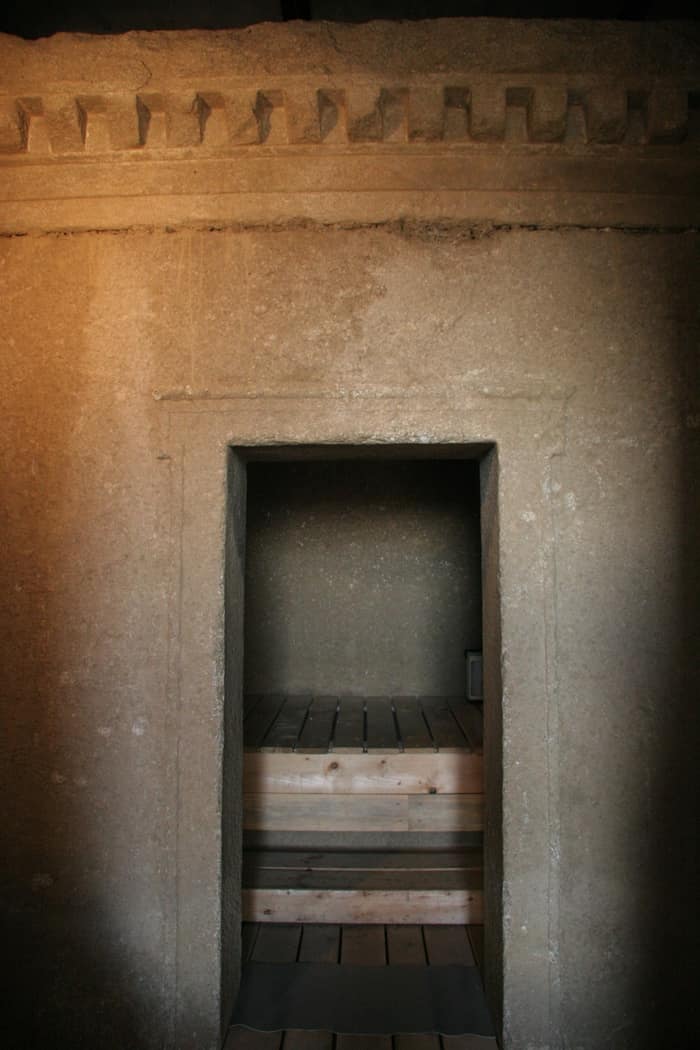
Thracian Tomb Ostrusha
Shipka · six-room Thracian tomb-temple with a painted ceiling
2 km away
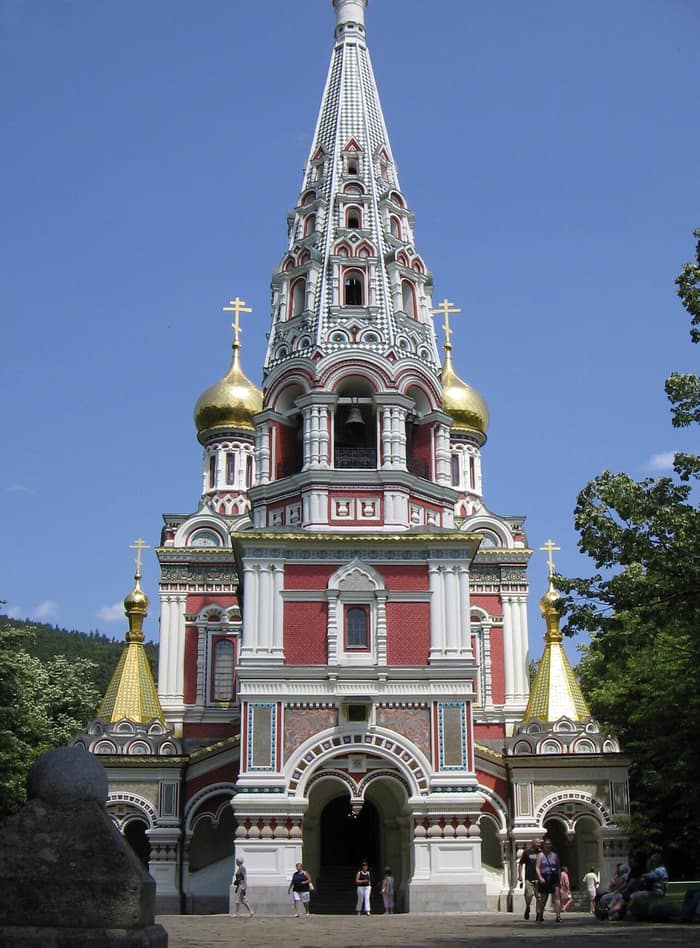
The Memorial Temple of the Birth of Christ (Shipka)
Shipka · Russian-style memorial church with gilded domes
2 km away
The Valley of the Thracian Rulers
Kazanlak · over 1,500 Thracian burial mounds in the Rose Valley
4 km away

Shipka Memorial
Shipka · tower with a giant lion, reached by 890 steps
5.5 km away