Thracian Tomb of Sveshtari, the UNESCO Tomb of the Ten Caryatids
The Thracian Tomb of Sveshtari is a stone royal tomb of the Getae, a Thracian people, dating from the early 3rd century BCE in the Razgrad region of north-eastern Bulgaria. It is famous for ten caryatids carved in the walls of its main chamber, found nowhere else in the Thracian lands. It has been a UNESCO World Heritage Site since 1985.
Ten sculpted women hold up the vault of this royal tomb, half human and half plant, and the paintings above them were never finished, as if the king died too suddenly.
The history of the Thracian Tomb of Sveshtari
The Getae were a Thracian people who, in the 5th century BCE, belonged to the Odrysian kingdom. When Philip II of Macedon campaigned in the Balkans between 352 and 340 BCE, he broke Odrysian power, and the Getae profited. By the second half of the 4th century they held sites on both banks of the lower Danube, and the region flourished as never before. The Macedonian threat pushed the Getic tribes to unite politically.
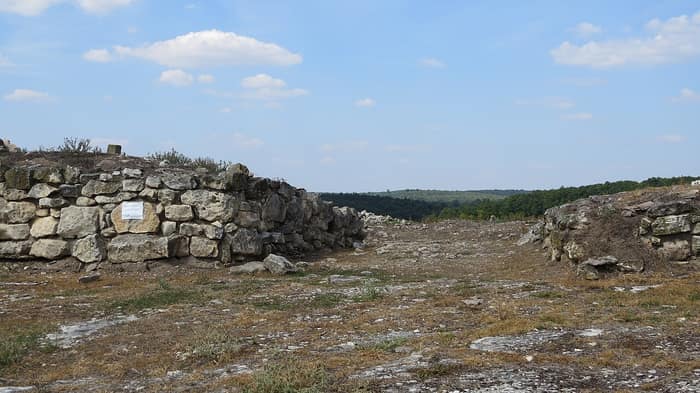
Near Sveshtari, on a plateau shaped like a peninsula by the ravines of the Krapinets river, archaeologists found the remains of a large ancient city, usually linked with Helis. A stone wall up to 4 metres thick encloses about 10 hectares and an inner wall about 5 hectares, filled with dwellings along streets. Coins and amphora stamps show that the settlement lived between about 335 and 250 BCE. Around it stand dozens of Getic burial mounds, now protected as the Sboryanovo reserve.
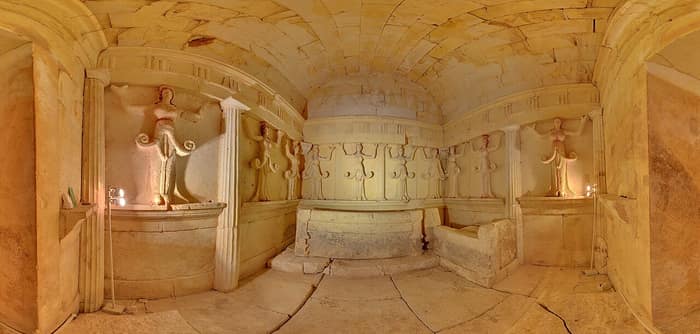
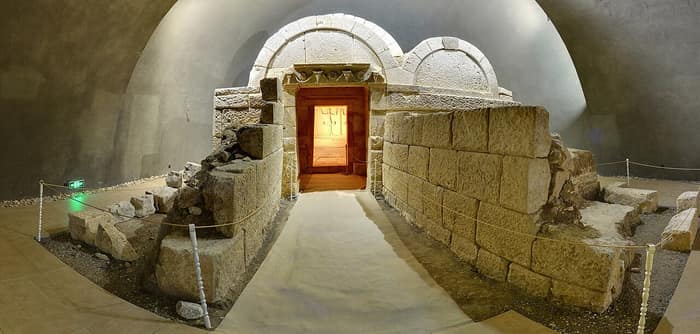
In August 1982, excavators digging the high mound called Ginina Mogila, part of the eastern necropolis of Sboryanovo, uncovered the royal tomb. The work was led by the archaeologist Maria Chichikova with Totyu Ivanov, and the find became an archaeological sensation. The tomb, built in the first quarter of the 3rd century BCE of smoothly worked soft limestone blocks, is made up of a corridor and three square chambers, an antechamber, a side room and the burial chamber, each with a half-barrel vault. Ionic columns frame the entrance, with a frieze of stylised ox heads, rosettes and garlands above.
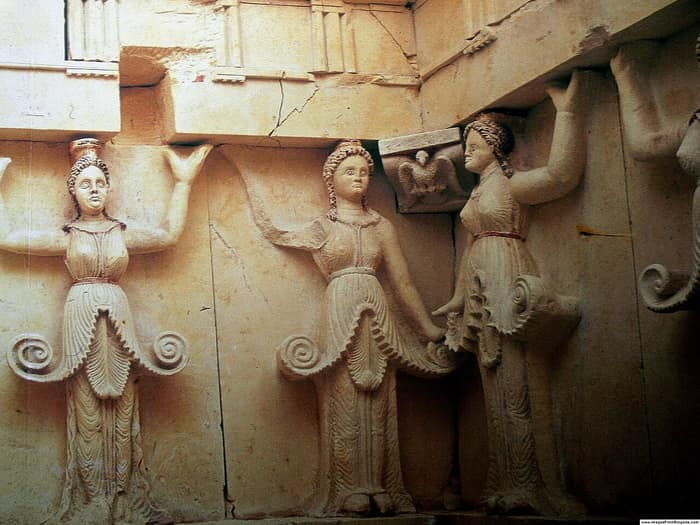
The main chamber is the masterpiece. Its walls are shaped like a colonnade, and ten female figures carved in high relief, about 1.20 metres tall, stand with raised arms, holding up the blocks beneath the vault. They wear long pleated dresses, curly hair and a basket-like crown called a kalathos, and they still carry traces of dark-brown paint. Their lower body is shaped like a flower. In the lunette under the vault, a painted scene shows a ruler on horseback with two armour-bearers, facing a goddess who offers him a golden wreath, followed by four women with gifts. Both the sculpture and the painting were left unfinished, a sign, scholars say, that the ruler died suddenly.
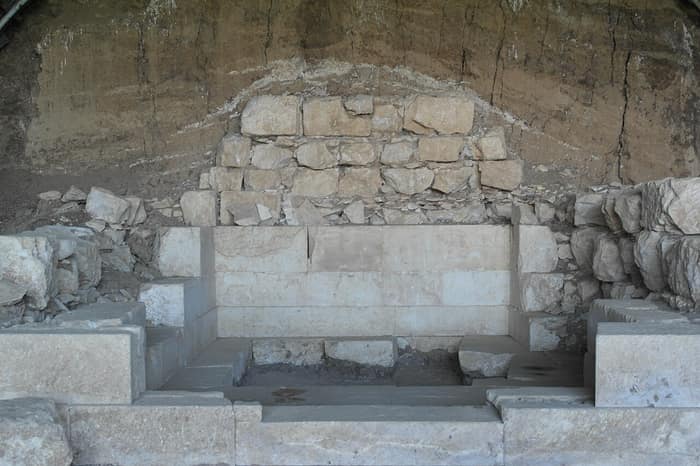
Who was buried here is not certain, but the tomb is probably that of King Dromichaetes of the Getae, who ruled around 300 BCE, and his wife, said to be the daughter of Lysimachus, a successor of Alexander the Great. The tomb had been robbed in antiquity, yet the bones of five horses sacrificed for the ruler survive, along with two stone beds, one of them for the wife and added later. Next to one bed stood a stone façade of a miniature temple, suggesting the ruler was to be worshipped as a hero. UNESCO added the tomb to its list in 1985.
Curious facts about the Thracian Tomb of Sveshtari
- The ten caryatids with raised arms are unique in the Thracian lands: they are half woman, half plant, and their dresses end in a shape like an upturned flower.
- The sculptors and painter never finished their work, and some caryatids have roughly cut hands; the drawing in the lunette is only outlined in black chalk.
- A figure on the vault painting wears a ram's horn above the ear, a detail also seen in portraits of Alexander the Great, which supports the link to a king.
- A Celtic La Tène fibula was found in the burial, though all other elements of the rite are typically Thracian.
- Among the burial customs was a dog laid on a stone, a custom linked to the Getae.
- In 2012 archaeologists found a golden treasure near the village, with a gold ring, 44 depictions of female figures and 100 golden buttons from about 150 tombs of the 4th century BCE.
Tours near Thracian Tomb of Sveshtari
Experiences in the area that you can book online with Viator:

Valley of the Thracian Kings, Hidden Treasures
See details ›
Kazanlak-Rose Valley-Valley of the Thracian Kings - private tour from Plovdiv
See details ›
A Day trip to the Thracian Kings, The Valley of Roses & Buzludzha
See details ›
Thracian Valley wine tasting - private day tour from Plovdiv
See details ›Visiting the Thracian Tomb of Sveshtari
- The tomb stands in the Sboryanovo historical and archaeological reserve, about 2.5 km south-west of the village of Sveshtari.
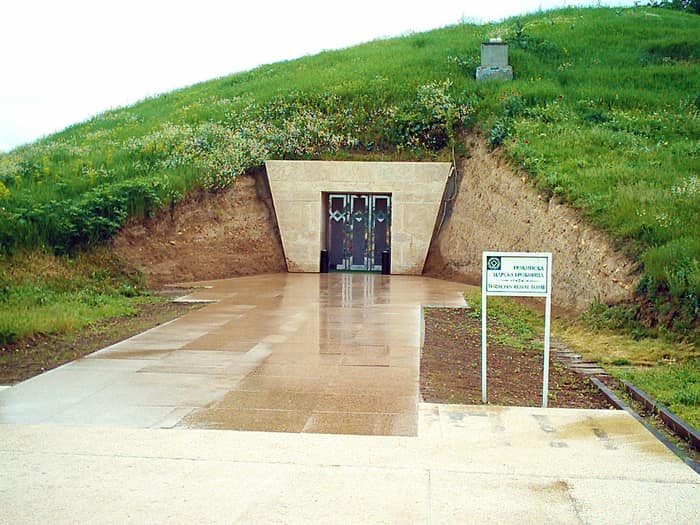
- Unlike some other Thracian tombs, the original is visitable. To protect it, the mound was lifted off and a concrete shell placed over the tomb, and the earth was then piled back on top.
- Next to the royal tomb are two smaller mounds with a single chamber each, which have also been opened up.
- Rules on photography and guided visits can change, so check the current opening hours and visiting conditions before you go.
- The mounds near the village and the remains of the city of Helis give a sense of how large the Getic centre once was.
Opening hours, access and conditions can change. Check before you go.
Map: where Thracian Tomb of Sveshtari is
Photos of Thracian Tomb of Sveshtari
Questions
What is the Thracian Tomb of Sveshtari?
It is a royal tomb of the Getae, a Thracian people, built in the early 3rd century BCE inside a burial mound near Sveshtari. It is known for ten carved caryatids and has been a UNESCO World Heritage Site since 1985.
Where is the Thracian Tomb of Sveshtari?
It lies 2.5 km south-west of the village of Sveshtari in Razgrad Province, about 42 km north-east of Razgrad and about 9 km from Isperih.
Who was buried in the Sveshtari tomb?
Probably the Getic king Dromichaetes and his wife, who may have been the daughter of Lysimachus. This is a scholarly hypothesis and not proven.
What makes the Sveshtari tomb special?
Its ten caryatids carved in high relief on the walls of the central chamber and the lunette painting are the only examples of this type found so far in the Thracian lands.
Why are the paintings unfinished?
Both the caryatids and the painted scene were left unfinished, which scholars take as a sign that the ruler died suddenly before the work was done.
What else is worth seeing near Sveshtari?
Abritus is about 30 km away, the Ibrahim Pasha Mosque about 31 km, the Great Basilica of Pliska about 49 km and the Tombul Mosque in Shumen about 54 km.
Also nearby
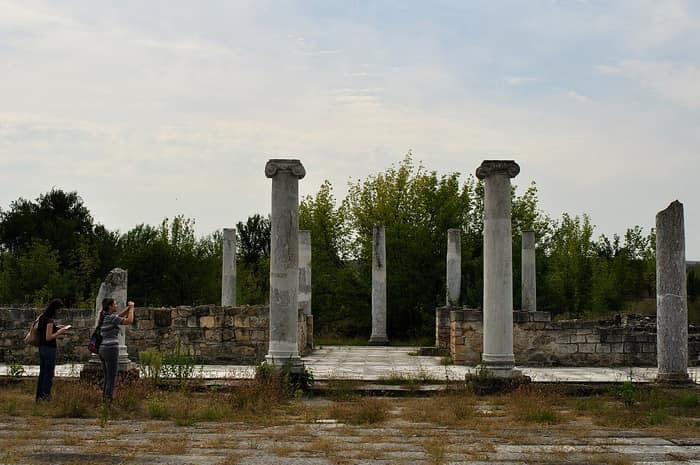
Abritus
Razgrad · Roman walled city and 835 gold coins
30 km away
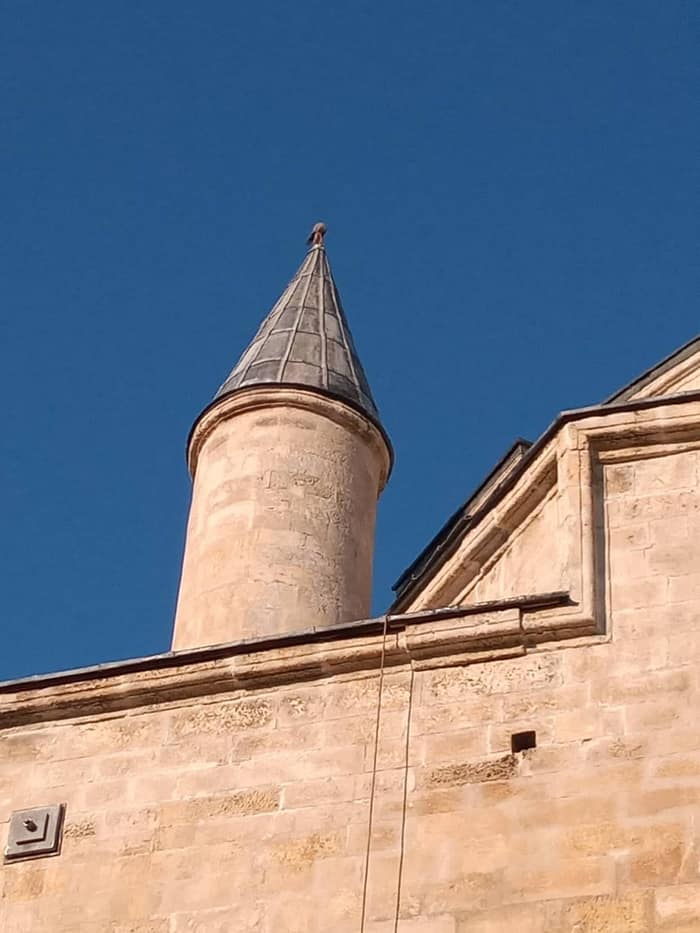
Ibrahim Pasha Mosque
Razgrad · Ottoman mosque with birdhouses in its walls
31 km away
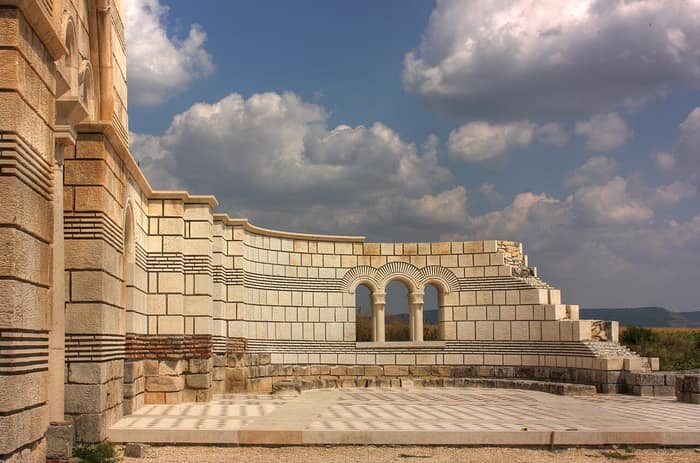
Great Basilica, Pliska
Pliska · giant 9th-century cathedral and monastery of the first capital
49 km away
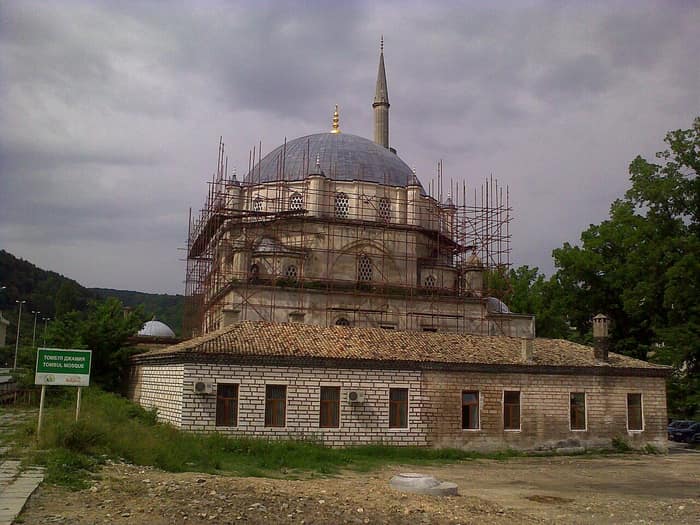
Tombul Mosque
Shumen · Bulgaria's largest mosque, with a 25 m dome
54 km away