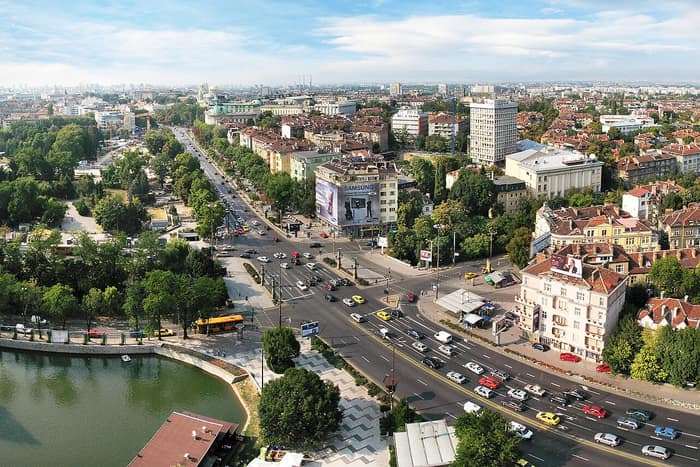
Eagles' Bridge, Sofia's Gateway Guarded by Bronze Eagles
Eagles' Bridge is a single-arch stone bridge of 1891 over the small Perlovska River in the middle of Sofia, named after the four bronze eagles on its granite columns. It is both one of the city's best-known landmarks and one of its busiest junctions, a few steps from Borisova Gradina and Sofia University. A short stop here tells a surprising story of the young capital.
Four bronze eagles stand on granite columns at the entrance to central Sofia, and they were meant as symbols of freedom. The spot is where, in March 1878, locals welcomed freed Bulgarian prisoners home with bread and salt.
The history of Eagles' Bridge
Sofia was declared the capital of the Principality of Bulgaria in 1879, and in the following years the young capital began raising grand buildings to catch up with the big cities of Europe. In 1888 the city council decided to build a bridge as a symbolic eastern entrance to the town. Until then only an old wooden bridge had crossed the Perlovska River here, marking the eastern edge of Sofia, where the road to Constantinople, known in Bulgarian as Tsarigrad, began.
With few trained Bulgarian specialists available, the council turned to foreigners, as it did for many projects of the time. The Czech architects Antonín Kolář, then chief architect of Sofia, and Václav Prošek drew up the design. The bridge was built in 1891 by Václav Prošek together with his brother Josef and his cousins Bohdan and Jiří, who had already designed and built the almost identical Lions' Bridge in 1889. The whole construction is said to have cost 80,000 gold leva. The bronze eagles and the iron railings were designed and cast by the Vienna firm of Rudolph Philipp Waagner, whose work also decorates other landmarks in Sofia.
The eagles were chosen as symbols of freedom. In March 1878, just after the liberation of Bulgaria, Sofia’s citizens welcomed at this spot the political prisoners and exiles who had returned from Diyarbakır in Asia Minor and who had risen against Ottoman rule. A modest stone block set up by the municipality in the 1990s still recalls the event.
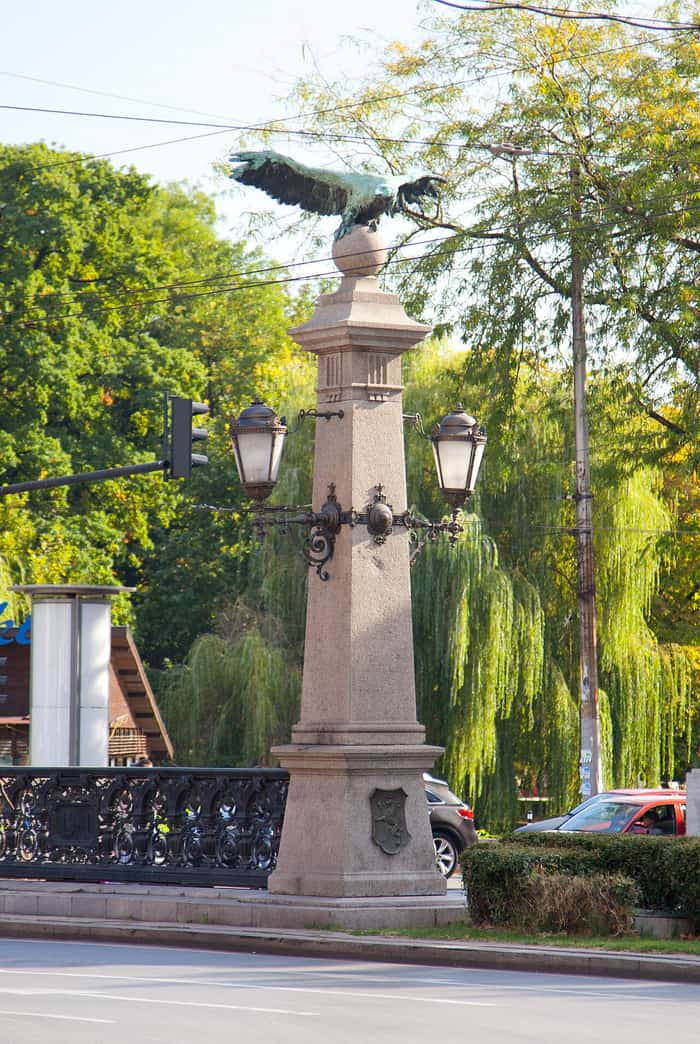
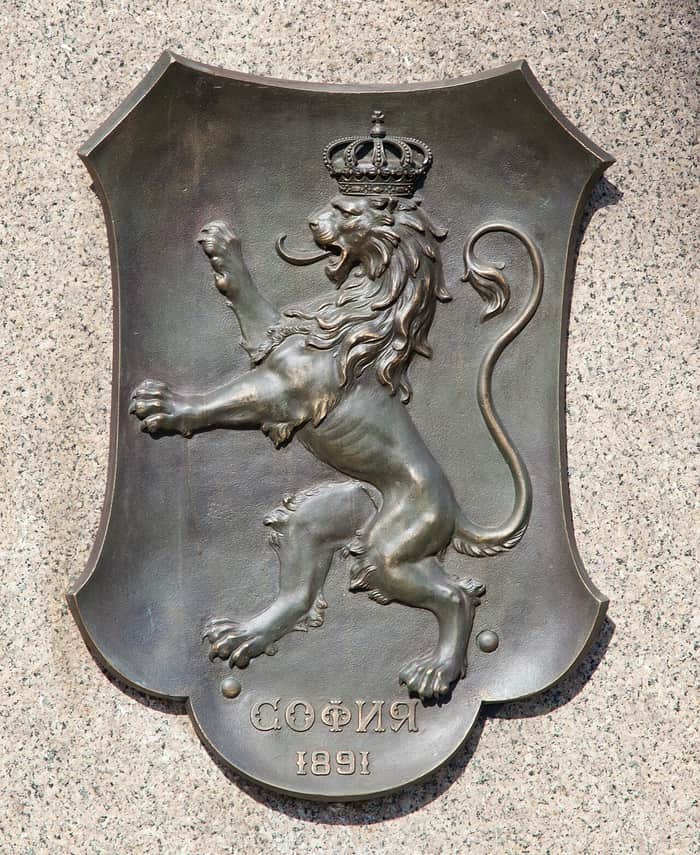
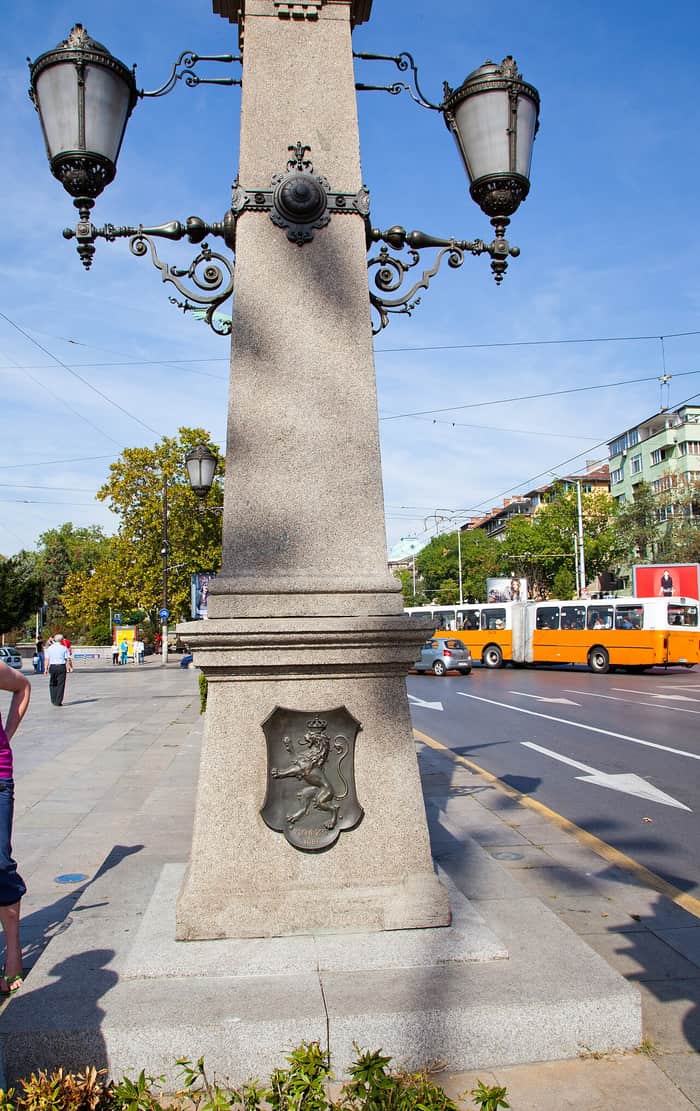
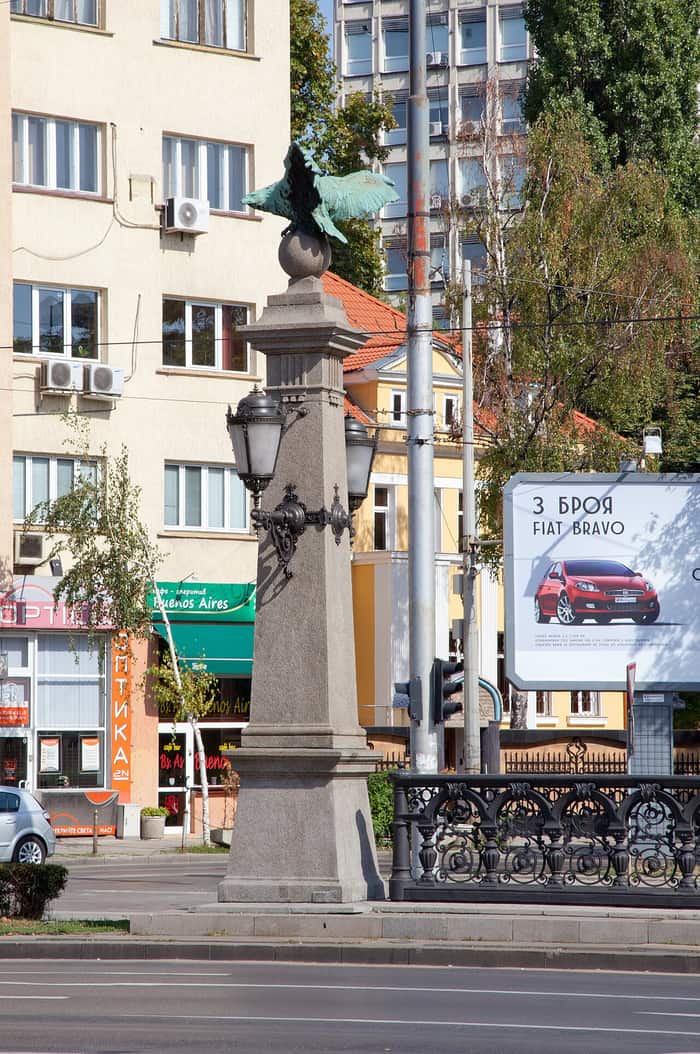
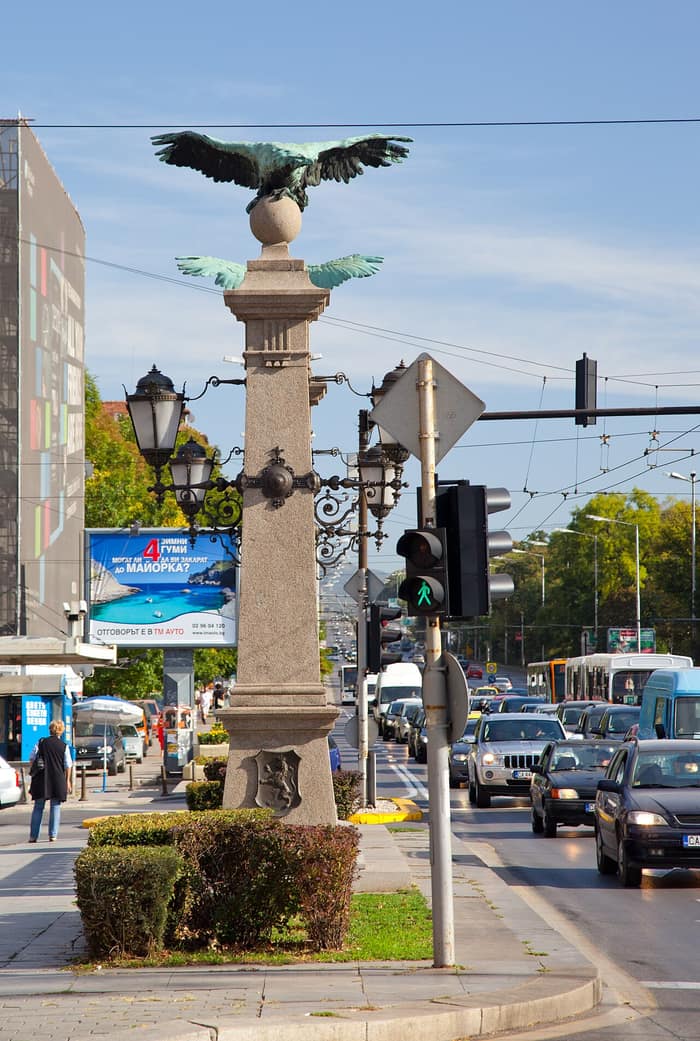
The bridge itself is a broad, massive stone arch with a span of 15.8 metres. On each side stands a richly decorated cast-iron railing about 10 metres long, bearing the year 1891, and each railing is flanked by two granite columns roughly 7 metres high, each carrying two street lamps and crowned by a stone ball with a bronze eagle with outstretched wings. The structure has been widened at least three times. A tram line once crossed it, the boulevard was widened and a pedestrian underpass built in 1970, and the junction was reorganised again in 1991, when the tram rails were taken out.
Over time the bridge has become a meeting place as much as a crossing. Since 1989 it has often been chosen for public gatherings, from the huge rally of 7 June 1990 to the environmental protests of 2012 and the demonstrations of 2013 and 2020–2021. Today two metro stations serve the area, Sofia University since 2009 and Orlov Most on the M3 line since August 2020, and one of the columns with its eagle appears on the back of the Bulgarian 20-lev banknote.
Curious facts about Eagles' Bridge
- The four bronze eagles look slightly downwards and sideways, so they seem less about to take off than just landed, keeping a watchful eye on the road.
- One of the columns and its bronze eagle are shown on the reverse of the Bulgarian 20-lev banknote issued in 1999 and 2007.
- The Perlovska River is barely two metres wide and flows in an artificial concrete bed, much like the Wien River in Vienna.
- Tsarigrad, the name of the road that starts here, means “City of the Tsars” and was the Bulgarian name for Constantinople.
- The iron railings carry the date 1891, the year the bridge was finished, and the Vienna firm that cast them also made metalwork for the Vasil Levski Monument and the fence of the City Garden in Sofia.
- The Lions' Bridge, built by the same team in 1889, is almost a twin of this bridge and guards the northern entrance to the city centre.
Tours near Eagles' Bridge
Experiences in the area that you can book online with Viator:

Half Day Tour around Sofia and the mountains with Thermal Spa
See details ›
ATV Off Road Tour Near Sofia Guided Quad Bike Experience
See details ›
Plovdiv, Asen's Fortress and Bachkovo Monastery small group tour with pickup
See details ›
Full-day Rila Monastery, Stob Pyramids and St Ivan Rilski Cave from Sofia
See details ›Visiting Eagles' Bridge: what to expect
- The bridge is the centre of one of the busiest road junctions in Sofia, so cross carefully and look for the pedestrian underpasses and crossings.
- Walk to one of the granite columns to see the eagles at close range, and look at the cast-iron railing with its 1891 date.
- The area is easy to reach by metro: Sofia University station and Orlov Most station both lie close to the bridge.
- Within a short walk are Borisova Gradina park, Lake Ariana, the Vasil Levski National Stadium, the Monument to the Soviet Army and Sofia University.
- From the bridge, the pleasant Tsar Ivan Asen II Street leads off with shops, cafés and a cultural centre.
Opening hours, access and conditions can change. Check before you go.
Map: where Eagles' Bridge is
Photos of Eagles' Bridge
Questions
What is Eagles' Bridge in Sofia?
Eagles' Bridge is a stone arch bridge built in 1891 over the Perlovska River in central Sofia. It takes its name from the four bronze eagles on its granite columns.
Why is it called Eagles' Bridge?
It is named after the four bronze eagles placed on the columns at its corners, which stand as symbolic guardians and symbols of freedom.
Who built Eagles' Bridge?
The Czech architect Václav Prošek built it with his brother Josef and cousins Bohdan and Jiří, from a design drawn with Antonín Kolář. The metalwork came from a Vienna firm.
How old is Eagles' Bridge?
The bridge was completed in 1891, two years after the similar Lions' Bridge. The decision to build it dates from 1888.
How do I get to Eagles' Bridge?
The nearest metro stations are Sofia University and Orlov Most, and the bridge lies a short walk from the city centre, next to Borisova Gradina park.
What else is near Eagles' Bridge?
Borisova Gradina park, Lake Ariana, the Vasil Levski National Stadium, the Monument to the Soviet Army and Sofia University are all close by.
Also nearby
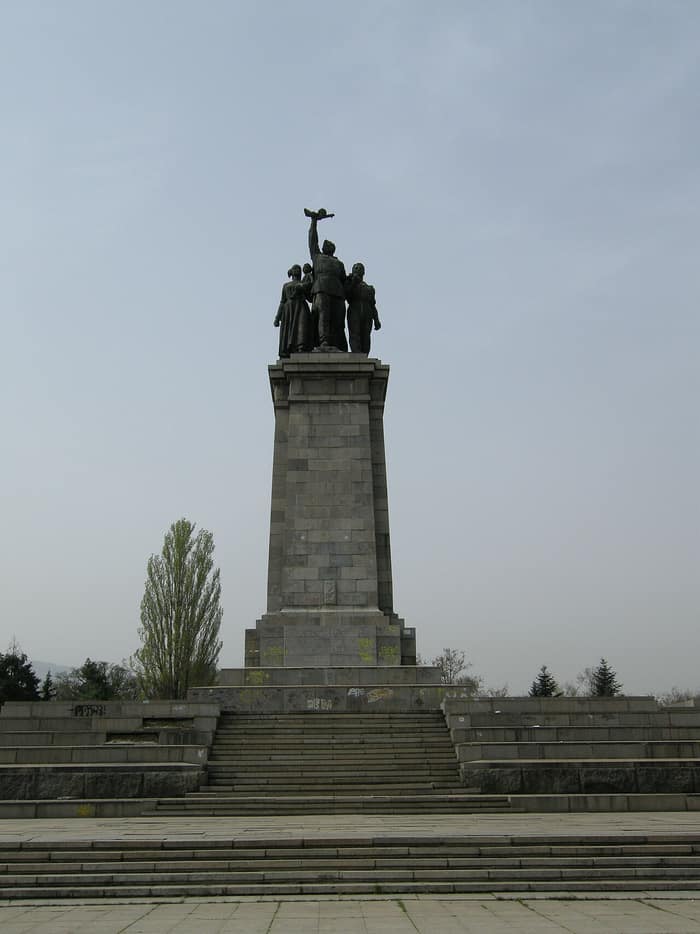
Monument to the Soviet Army
Sofia · Cold War memorial, repainted often, partly dismantled
250 m away
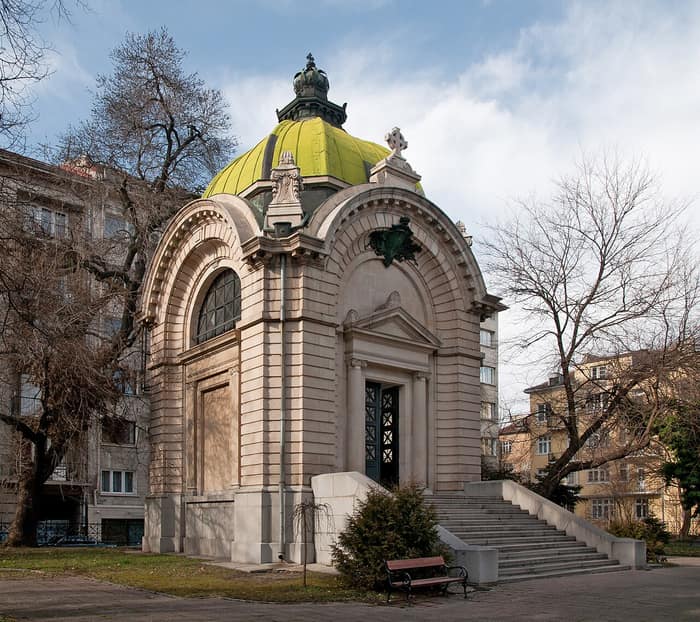
Battenberg Mausoleum
Sofia · neo-baroque tomb of Bulgaria's first prince
450 m away
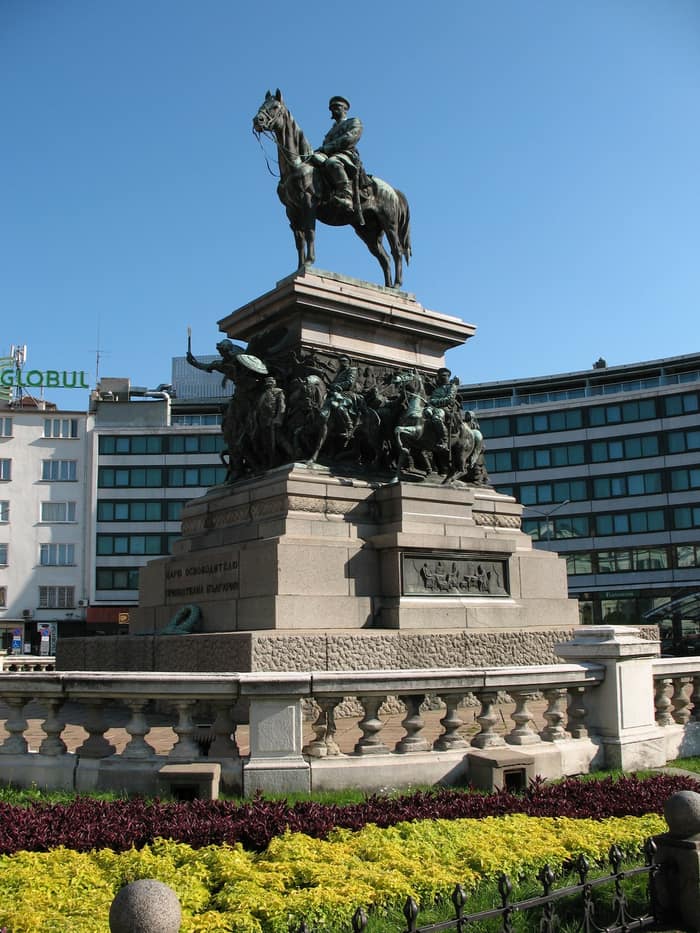
Monument to the Tsar Liberator
Sofia · bronze tsar on a black granite plinth, 1907
550 m away
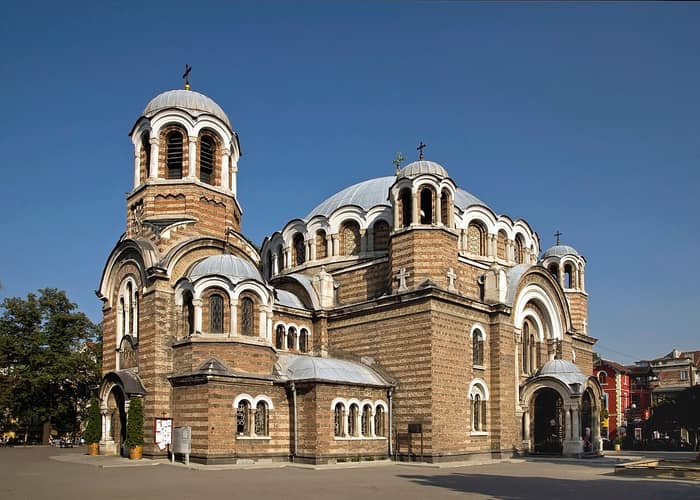
Seven Saints Church
Sofia · a mosque turned church, built over a Roman shrine
800 m away